GeoExchange

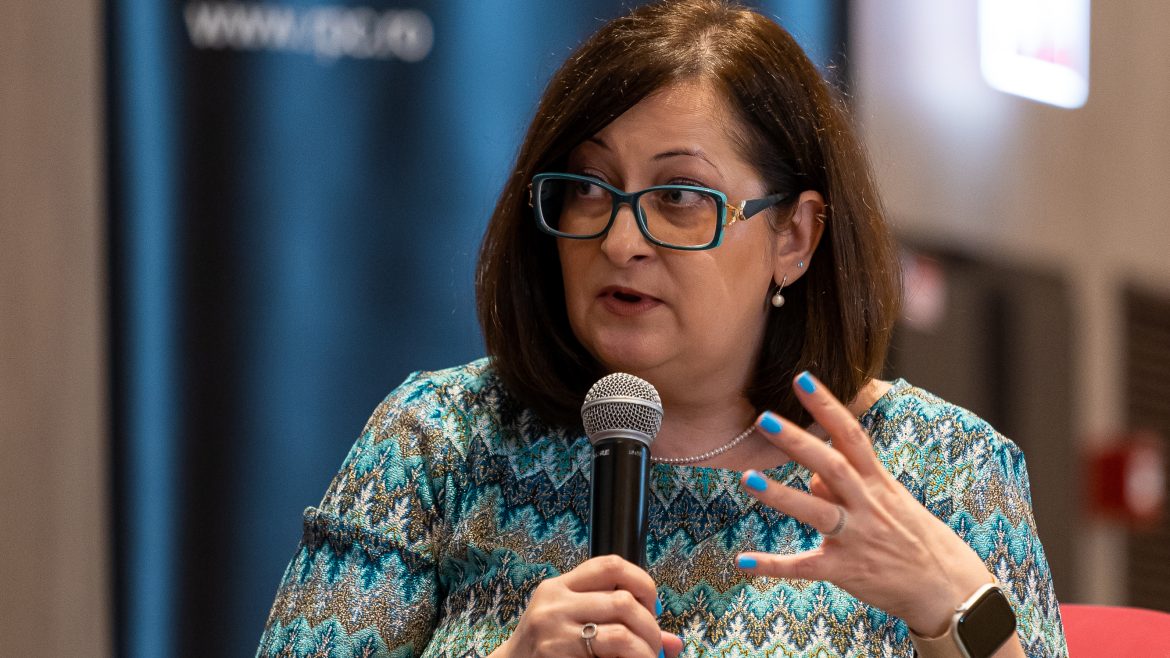
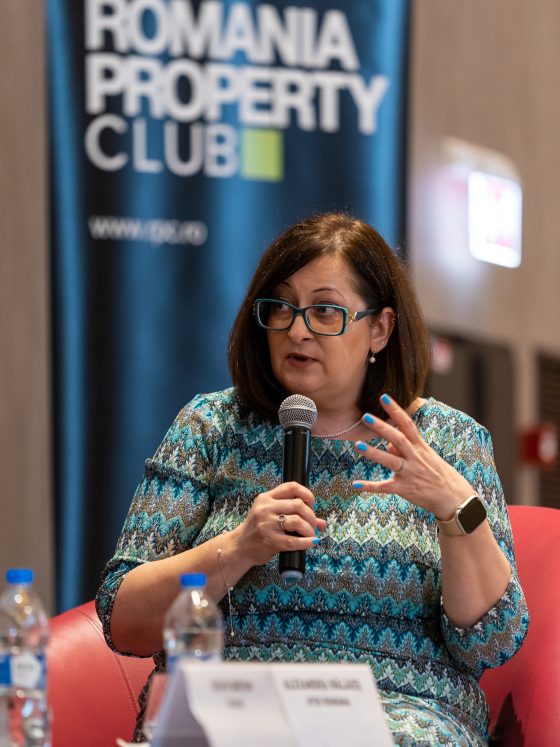
RPC Talks with Alexandra Mălăieș, Facility Manager, Atos Romania

RPC Talks with Alexandra Mălăieș, Facility Manager, Atos Romania

RPC Talks with Alexandra Mălăieș, Facility Manager, Atos Romania 1707 2560 ROMANIA PROPERTY CLUB

RPC Talks with Alexandra Mălăieș

Facility Manager, Atos Romania
RPC Talks with Alexandra Mălăieș, Facility Manager, Atos Romania

Company Profile

Atos has entered the Romanian IT market in July 2011 and operates in Timisoara, Bucharest and Braşov and employs more than 2400 people.

Timișoara was the main core and the first major delivery center acquired and expanded by Atos in 2011. What are the advantages of Timișoara for a multinational entering the Romanian market?

For Atos, Timișoara has always been the heart of our business in Romania. From the very beginning, the local community proved to offer real and significant growth potential: a valuable pool of students and professionals, exceptional language skills, and two universities with which we have built strong partnerships.

At the same time, the city has grown and developed alongside us. Today, Timișoara is no longer just a major hub for economic development, but also a city with an increasingly visible diplomatic life. We see this through the eyes of our clients as well – when they visit us, they are impressed by the city and the variety of events they discover here. For them, all of this reinforces confidence in a business that operates within a stable and dynamic environment.

Another advantage is the balance between operational costs and the conditions Timișoara provides. We have a top-quality office here that we are truly proud of. When we decided to build in Timișoara, it also mattered that 10 years ago we were the first client – the anchor client – of United Business Center 1, part of what was then Openville, now Iulius Town.

You have been part of the Atos team for 10 years, managing the company’s real estate department across operations in four cities: Timișoara, Bucharest, Cluj-Napoca, and Brașov. How do people relate to the workspace in these four cities, and what differences have you noticed?

Even before the pandemic, Atos offered flexibility for working from home – around 20% of employees worked permanently outside the office. Today, this flexibility has become the norm. However, commuting conditions in each city play a big role in office attendance. In Bucharest, commutes take a long time. Cluj is becoming increasingly congested – if 10 years ago you could cross the city in 40 minutes, today you can easily spend an hour to an hour and a half in traffic for the same distance. Brașov is a relatively small city, and our colleagues enjoy going to the office to meet with their teams more frequently. Timișoara houses our main headquarters, where we regularly host client visits. Colleagues come in to meet with clients as well as with their team members. Essentially, the office has become a gathering place for teams and clients, as well as a space where colleagues reconnect with company values.

Ways of working have undergone many changes since the pandemic. What working model currently applies at Atos, and how do you utilize office space today – do private offices or open spaces prevail, and how much space is dedicated to employee well-being?

At Atos, we work flexibly, and the working model can vary from team to team based on the nature of their activity and specific client requirements. For example, we have clients who, for security reasons, require activities to be conducted from a specially designated space. We feature open-plan areas, secured zones, meeting rooms, and a generous, flexible space designed for gatherings and events.

For us, employee well-being translates into very concrete amenities: well-equipped kitchens, coffee, and fresh fruit. We also organize events where we encourage colleagues to participate, welcoming them with treats and small surprises.

What do your employees expect from their work environment? We know the office now competes with working from home. What tips the scales in favor of coming to the office – services, amenities, comfort, or community?

Employees want a “wow” office – a space where they feel good. We love seeing colleagues pleasantly surprised on their first visit, or clients impressed by the building and workspace. Proximity amenities are just as important. It’s easier to choose to come to the office when, after work, you can catch a movie, go to a restaurant, or do some shopping. That’s why the location of our offices is crucial and contributes directly to employee experience and satisfaction.

How does a company going through a global transformation with a local footprint reconfigure its real estate strategy? How do you adapt the space to these changes, and what are your plans for the coming years regarding the offices you occupy?

The Atos group strategy is firmly focused on growth in the coming years, and our offices must be prepared to support this evolution. We remain flexible so we can adapt space to various client requirements, supported by our landlord. We have just completed a complex transformation of an entire floor, and we are glad to be able to respond to these requests seamlessly.

We are also fortunate to have a furniture supplier that understands our needs and finds solutions to keep the office as flexible as possible. In fact, we have been using the same high-quality furniture for 9 years without needing major upgrades. We aim to use our resources efficiently, finding smart solutions to reorganize space based on current needs. We perform targeted refreshes in specific areas, but so far, radical changes haven’t been necessary.

How do we measure office efficiency?

I believe that in business, we need to talk more frequently about how we measure space efficiency. Traditional indicators like occupancy rates or square meters per desk are no longer sufficient.

Today, a proper evaluation of an office’s utility can be achieved, for instance, by incorporating workplace-related questions into employee engagement and satisfaction surveys.

The office must actively promote company values while fostering human interaction and team cohesion. In my view, these are the key metrics to evaluate whether an office truly adds value.

For example, we can measure how colleagues interact or the level of team cohesion after a period of regular in-person collaboration. Such indicators give us a much clearer picture of the value the workspace delivers to the business.
RPC Talks with Ștefan Gheorghiu, Managing Partner, 4Biz Properties

RPC Talks with Ștefan Gheorghiu, Managing Partner, 4Biz Properties

RPC Talks with Ștefan Gheorghiu, Managing Partner, 4Biz Properties 646 631 ROMANIA PROPERTY CLUB

RPC Talks with Ștefan Gheorghiu

Managing Partner, 4Biz Properties

Foto Stefan Gheorghiu 4biz – photo 1

Company Profile

The Seller & Partners is a prominent, independent real estate agency based in Brașov, Romania. Founded in January 2025, the firm specializes in trading high-end and new-construction properties, connecting local sellers with international capital.

Supply Dynamics: How is the supply landscape in the Iași region shifting after years of being the “Cinderella” of the national logistics market? What are the main projects under development, and what new logistics hubs are emerging?

Ștefan Gheorghiu: Iași is entering a new chapter. After years of being considered the “Cinderella” of the national logistics market, supply is beginning to structure itself around major developers and Class A projects. While it is not yet a mature market like Bucharest, Timișoara, or Cluj, the difference now is that Iași is no longer just a promise—it is becoming a tangible logistics destination.

The primary projects remain Proinvest, ELI Park Iași, Olympian Parks, and Oresa Industra. A major highlight is WDP’s entry into the market through the acquisition of the Proinvest park—a transaction valued at over €20 million, which serves as institutional validation for Iași. Additionally, another project of approximately 20,000 sq m is currently in the permitting phase, which could bring further liquidity to the market.

In terms of growth hubs, I would particularly look at the Lețcani–Miroslava area in connection with the A8 motorway. This is driven by both its proximity to the Pașcani–A7 junction and its strong connectivity potential toward Ungheni and the Republic of Moldova. The A8 is becoming vital, not merely as road infrastructure, but as a strategic element capable of repositioning the entire Moldavia region on Romania’s logistics map.

Tenant Profile: Who is driving demand in 2026, given the large number of projects currently under construction?

Ștefan Gheorghiu: In 2026, demand is being driven primarily by regional and national players rather than global mega-tenants. We are seeing strong interest from distribution companies, FMCG, retail, e-commerce, courier services, building materials, light manufacturing, and related services.

Iași holds an interesting strategic position: it doesn’t compete purely for storage, but rather for a blend of regional distribution, proximity to the Republic of Moldova, and access to a strong labor pool. For many occupiers, Iași can serve as a comprehensive hub for northeastern Romania, far beyond a mere local outpost.

Operational Challenges & Costs: How significantly have industrial land prices risen alongside the progress of major infrastructure projects?

Ștefan Gheorghiu: Industrial land prices have risen visibly, particularly in locations offering good infrastructure access, utilities, and proximity to primary roads. I wouldn’t call the market overheated, but landowners have begun pricing in the anticipated impact of the A8 motorway and the entry of major institutional developers.

The main challenge is that not every “industrial” plot is ready for immediate development. The true differentiators are road access, utility capacity, zoning status, electrical grid power, and permitting timelines. In Iași, the real cost isn’t just the land price—it’s the time-to-market. Consequently, shovel-ready land with clean zoning, access, and utilities will remain both scarce and expensive.

Nearshoring: Are Western companies moving production from Asia or high-risk zones closer to the EU, selecting Iași or northeastern Romania for its competitive labor costs?

Ștefan Gheorghiu: Yes, nearshoring is a real trend, but we need to look at Iași through a realistic lens. We are not yet seeing a massive wave of Western companies relocating production directly from Asia to Iași, but we are seeing a shift in strategic logic. Companies are actively seeking locations closer to the EU that offer greater stability and predictability than far-flung or geopolitically exposed markets.

Iași and northeastern Romania are well-positioned with competitive labor costs, strong universities, a large demographic basin, and proximity to the EU’s eastern border. However, for large manufacturing projects, final decisions hinge on infrastructure delivery, technical workforce availability, and permitting predictability.

I would describe Iași as currently being in a regional logistics consolidation phase, which precedes a mature industrial nearshoring phase. The potential is undeniably there, but it will be unlocked as transport infrastructure and the supply of modern space continue to solidify.

RPC Talks with Răzvan Calița, Managing Partner, The Seller & Partners

RPC Talks with Răzvan Calița, Managing Partner, The Seller & Partners

RPC Talks with Răzvan Calița, Managing Partner, The Seller & Partners 763 574 ROMANIA PROPERTY CLUB

RPC Talks with Răzvan Calița

Managing Partner, The Seller & Partners

Razvan Calita3

Company Profile

The Seller & Partners is a prominent, independent real estate agency based in Brașov, Romania. Founded in January 2025, the firm specializes in trading high-end and new-construction properties, connecting local sellers with international capital.

How is the sharp growth of tourism in Brașov influencing the new apartment market?

Demand from investors—who possess higher liquidity than buyers purchasing for personal use—has put upward pressure on prices. Developers are well aware that an apartment in a prime location can be sold at a premium to an investor calculating yield, compared to a local family relying on a standard mortgage.

Another consequence is a shift in the property mix. In new central or semi-central projects (such as the Coresi area or the Civic Center), developers tend to design more studios and 2-room apartments, and fewer 3- to 4-room units. The reason? These are the ideal units for short-term holiday rentals via platforms like Airbnb and Booking.

Moreover, the opening of the Ghimbav Airport has accelerated the perception of Brașov as an easily accessible international destination. Many buyers—hailing from Bucharest, but also from abroad, including the diaspora and foreign investors—are acquiring apartments as vacation homes, renting them out for the remainder of the year.

Due to high prices in the city driven by this tourism potential, many locals looking strictly for a home are being pushed toward metropolitan suburbs like Sânpetru, Ghimbav, Cristian, and Hărman. This is rapidly transforming “inner-mountain” Brașov into a commercial and tourism hub.

Are we entering the era of “Branded Residences” in Poiana Brașov?

The “Branded Residences” model offers owners the prestige of a 5-star brand alongside full access to hotel amenities, including spa services, concierge, and room service. The interest shown by major international players confirms the long-term growth potential of the area, effectively turning real estate into a luxury financial product.

Swissôtel Poiana Brașov stands as one of the most advanced projects of this kind. Apartment owners here benefit directly from the Accor Group’s premium standards. It is a professionally managed buy-to-let investment model where interior design is strictly dictated by the brand’s criteria. Already an established name on the local market, Swissôtel has been operational for 1.5 years, delivering concrete performance data that exceeds initial estimates. Investors who acquired this type of product are already enjoying net yields of over 10% per year. This historic performance has validated the business model to skeptical investors, proving that professional hotel management under a global brand is the key to profitability in 2026.

On the other hand, while geographically located in Cristian, Radisson Blu Grand Mountain Resort is designed as an extension of the mountain experience. It is an integrated resort with a strong emphasis on extensive amenities, such as wellness centers and restaurants. Its location in Cristian is strategic: it offers faster access to the highway and airport, bypassing seasonal traffic on the main Poiana road.

The Investor Appeal: Hands-Off Management & High Yields

Investors heavily favor the “Branded Residences” model due to its hassle-free management: the hotel handles maintenance, cleaning, and leasing, while the owner receives a share of the profit. Furthermore, a property backed by a renowned brand retains its value far better than an anonymous apartment building. Last but not least, these units boast superior liquidity, making them much easier to resell.

In Poiana Brașov, this specific segment is estimated to generate yields of over 9% per year, significantly outperforming the 4-5% average of standard apartments in the city.

Conclusion: If Tractorul is the residential “heart” of Brașov, Poiana Brașov and Calea Poienii are its “crown”. The shift toward branded residences marks Brașov’s departure from mass tourism and its grand entry into the international luxury league.

CONTACT

RPC Talks with Emma Toma, AFI Romania

RPC Talks with Emma Toma, AFI Romania

RPC Talks with Emma Toma, AFI Romania 915 910 ROMANIA PROPERTY CLUB

RPC Talks with Emma Toma

Head of Office Division, AFI Romania

Emma Toma

Company Profile

AFI Romania is part of AFI Properties, a leading real estate development, management and investment companies, operating in Central and Eastern Europe since 1997.
AFI BRASOV is the second mixed-use project developed by AFI in Romania, inaugurated in 2020 in the hart of Brasov city, combining 45,000 sqm GLA of retail with 25,000 sqm offices (AFI PARK BRASOV) developed in phases.
AFI Romania has under management aprox. 300,000 sqm office areas and close to 175,000 sqm retail spaces.

What are the primary challenges and opportunities currently shaping the Brașov office market?

Brașov benefits heavily from a motivated, highly educated workforce and a low unemployment rate. The opening of the International Airport in 2023 was a game-changer, removing major logistical hurdles and drastically improving connectivity for corporate operations. Additionally, thriving tourism has fostered a robust hospitality infrastructure that helps attract and retain top-tier talent in the city.

On the flip side, the supply of Class A office spaces has historically lagged behind the demand of expanding corporations. In the tech and services sectors, workplace quality—spanning sustainability, premium amenities, and wellness—has now become a deciding factor in talent recruitment. AFI Romania’s footprint here since 2020 gives us a front-row seat to this emerging economic hub’s evolution. The success of our first phase confirms that the market is mature enough for premium investments, and there is immense potential in closing the gap between the demand for premium spaces and the current supply.


How has AFI Park Brașov 1 performed, and what kind of companies have moved in?

AFI Park Brașov 1 has been a resounding success and a powerful proof of concept for the local market. The building is 100% leased to high-profile IT companies, BPOs, and multinational service firms. In a market where quality space was scarce, full occupancy is the clearest testament to the depth of local demand and the quality we introduced in 2020. This definitive response is precisely why we launched Phase 2: Brașov’s appetite for premium workspaces is far from satisfied, and we intend to keep raising the bar.


What new features will AFI Park Brașov 2 bring to the market?

AFI Park Brașov is designed as a comprehensive work-and-lifestyle ecosystem, not just an office building. What makes this project truly unique in Brașov is its integration. Physically connected to the AFI Brașov shopping center, our tenants enjoy direct access to 45,000 sqm of retail, featuring over 150 international and local brands, a fitness club, cinema, beauty salon, and various daily services. Corporate tenants also benefit from the AFI Club loyalty program, which grants employees discounts between 10% and 30% across partner retailers and services.

Currently under construction, AFI Park Brașov 2 will deliver an additional 12,000 sqm of Gross Leasable Area (GLA), bringing the total footprint of the AFI Park Brașov office project to 27,500 sqm GLA.

Sustainability is at the core of our identity. The new building is targeting LEED Gold certification, designed to deliver over 20% in energy savings and a 30% reduction in water consumption compared to standard baselines. Furthermore, the project is on track to achieve LEED Zero Carbon certification—a commitment that firmly places AFI Park Brașov 2 at the forefront of responsible, forward-thinking real estate development in Romania.


RPC Talks with Valentin Zaharia, Veolia Romania

RPC Talks with Valentin Zaharia, Veolia Romania

RPC Talks with Valentin Zaharia, Veolia Romania 2192 2560 ROMANIA PROPERTY CLUB

RPC Talks to Valentin Zaharia

Technical & Performance Director, Veolia Romania

Valentin Zaharia Director Tehnic șI Performanță Veolia RomâNia

Company Profile

Veolia România is part of Veolia’s global network, a world leader in delivering essential services (water, energy, waste) and driving ecological transformation. In Romania, our teams develop, build, and operate integrated water, wastewater, and energy solutions, helping municipalities and private clients meet modern sustainability requirements. By drawing on Veolia’s nearly two centuries of international expertise and blending it with 25 years of local know-how, we ensure top-tier efficiency and reliability in every project, while contributing to a positive environmental impact and stronger communities.

How does Veolia Integrated Renewable Energy Solution help real estate developers meet their ESG targets?

Veolia România, through its local ecosystem of companies, follows an approach that focuses on reducing carbon footprints, reusing resources and minimizing their usage and consumption, and enhancing cost efficiency. Moreover, when it comes to integrated renewable energy solutions, we showcase this strategy through our GeoExchange system, which harnesses shallow-ground geothermal energy in conjunction with high-efficiency heat pumps to provide heating, cooling, and domestic hot water.

By significantly lowering CO₂ emissions, often up to 90% compared to conventional systems, the GeoExchange solution can enable real estate developers to achieve stringent ESG benchmarks, attract green financing, and earn certifications such as nZEB, LEED or BREEAM. Beyond decarbonization, our integrated services also include long-term operation and maintenance, enabling continuous system performance, predictable energy costs, and transparent tracking of sustainability metrics. Moreover, another interesting feature is its versatility, as the solution is suitable for both new and existing buildings.

In which real estate projects has the Veolia Geoexchange solution been implemented and what are the advantages for the residents of those projects?

We have successfully introduced the GeoExchange technology in multiple residential projects in Bucharest and in multi-purpose developments around the country, such as retail, industrial, office and residential buildings, several airports (Sibiu, Satu Mare, Tuzla), private and public hospitals, and also in a very special project in Alba Iulia, an elderly care home, for which we designed and built a turnkey solution, reducing the reliance on traditional gas boilers by up to 85%.

The GeoExchange solution provides residents with lower and more predictable energy costs, higher comfort in the living spaces, and a considerably smaller carbon footprint. Furthermore, the system reduces operational costs by up to 50%, providing significant financial advantages.