RPC Talks with Ștefan Gheorghiu
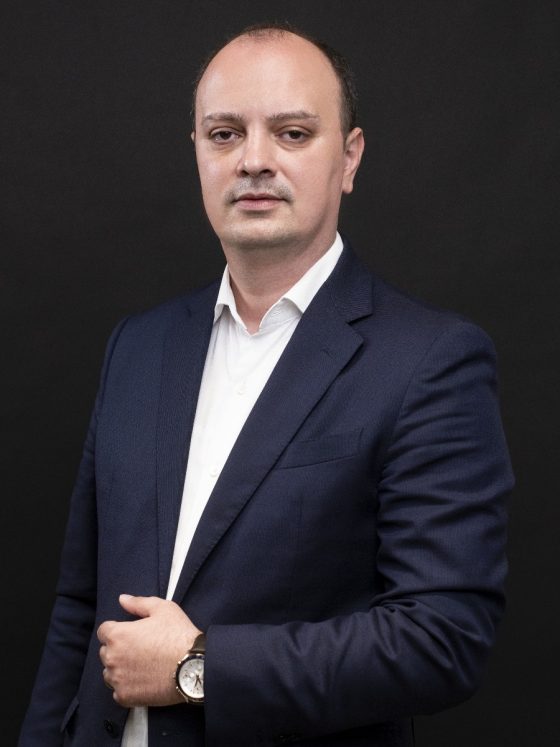
Managing Partner, 4Biz Properties
Company Profile
The Seller & Partners is a prominent, independent real estate agency based in Brașov, Romania. Founded in January 2025, the firm specializes in trading high-end and new-construction properties, connecting local sellers with international capital.
Supply Dynamics: How is the supply landscape in the Iași region shifting after years of being the “Cinderella” of the national logistics market? What are the main projects under development, and what new logistics hubs are emerging?
Ștefan Gheorghiu: Iași is entering a new chapter. After years of being considered the “Cinderella” of the national logistics market, supply is beginning to structure itself around major developers and Class A projects. While it is not yet a mature market like Bucharest, Timișoara, or Cluj, the difference now is that Iași is no longer just a promise—it is becoming a tangible logistics destination.
The primary projects remain Proinvest, ELI Park Iași, Olympian Parks, and Oresa Industra. A major highlight is WDP’s entry into the market through the acquisition of the Proinvest park—a transaction valued at over €20 million, which serves as institutional validation for Iași. Additionally, another project of approximately 20,000 sq m is currently in the permitting phase, which could bring further liquidity to the market.
In terms of growth hubs, I would particularly look at the Lețcani–Miroslava area in connection with the A8 motorway. This is driven by both its proximity to the Pașcani–A7 junction and its strong connectivity potential toward Ungheni and the Republic of Moldova. The A8 is becoming vital, not merely as road infrastructure, but as a strategic element capable of repositioning the entire Moldavia region on Romania’s logistics map.
Tenant Profile: Who is driving demand in 2026, given the large number of projects currently under construction?
Ștefan Gheorghiu: In 2026, demand is being driven primarily by regional and national players rather than global mega-tenants. We are seeing strong interest from distribution companies, FMCG, retail, e-commerce, courier services, building materials, light manufacturing, and related services.
Iași holds an interesting strategic position: it doesn’t compete purely for storage, but rather for a blend of regional distribution, proximity to the Republic of Moldova, and access to a strong labor pool. For many occupiers, Iași can serve as a comprehensive hub for northeastern Romania, far beyond a mere local outpost.
Operational Challenges & Costs: How significantly have industrial land prices risen alongside the progress of major infrastructure projects?
Ștefan Gheorghiu: Industrial land prices have risen visibly, particularly in locations offering good infrastructure access, utilities, and proximity to primary roads. I wouldn’t call the market overheated, but landowners have begun pricing in the anticipated impact of the A8 motorway and the entry of major institutional developers.
The main challenge is that not every “industrial” plot is ready for immediate development. The true differentiators are road access, utility capacity, zoning status, electrical grid power, and permitting timelines. In Iași, the real cost isn’t just the land price—it’s the time-to-market. Consequently, shovel-ready land with clean zoning, access, and utilities will remain both scarce and expensive.
Nearshoring: Are Western companies moving production from Asia or high-risk zones closer to the EU, selecting Iași or northeastern Romania for its competitive labor costs?
Ștefan Gheorghiu: Yes, nearshoring is a real trend, but we need to look at Iași through a realistic lens. We are not yet seeing a massive wave of Western companies relocating production directly from Asia to Iași, but we are seeing a shift in strategic logic. Companies are actively seeking locations closer to the EU that offer greater stability and predictability than far-flung or geopolitically exposed markets.
Iași and northeastern Romania are well-positioned with competitive labor costs, strong universities, a large demographic basin, and proximity to the EU’s eastern border. However, for large manufacturing projects, final decisions hinge on infrastructure delivery, technical workforce availability, and permitting predictability.
I would describe Iași as currently being in a regional logistics consolidation phase, which precedes a mature industrial nearshoring phase. The potential is undeniably there, but it will be unlocked as transport infrastructure and the supply of modern space continue to solidify.