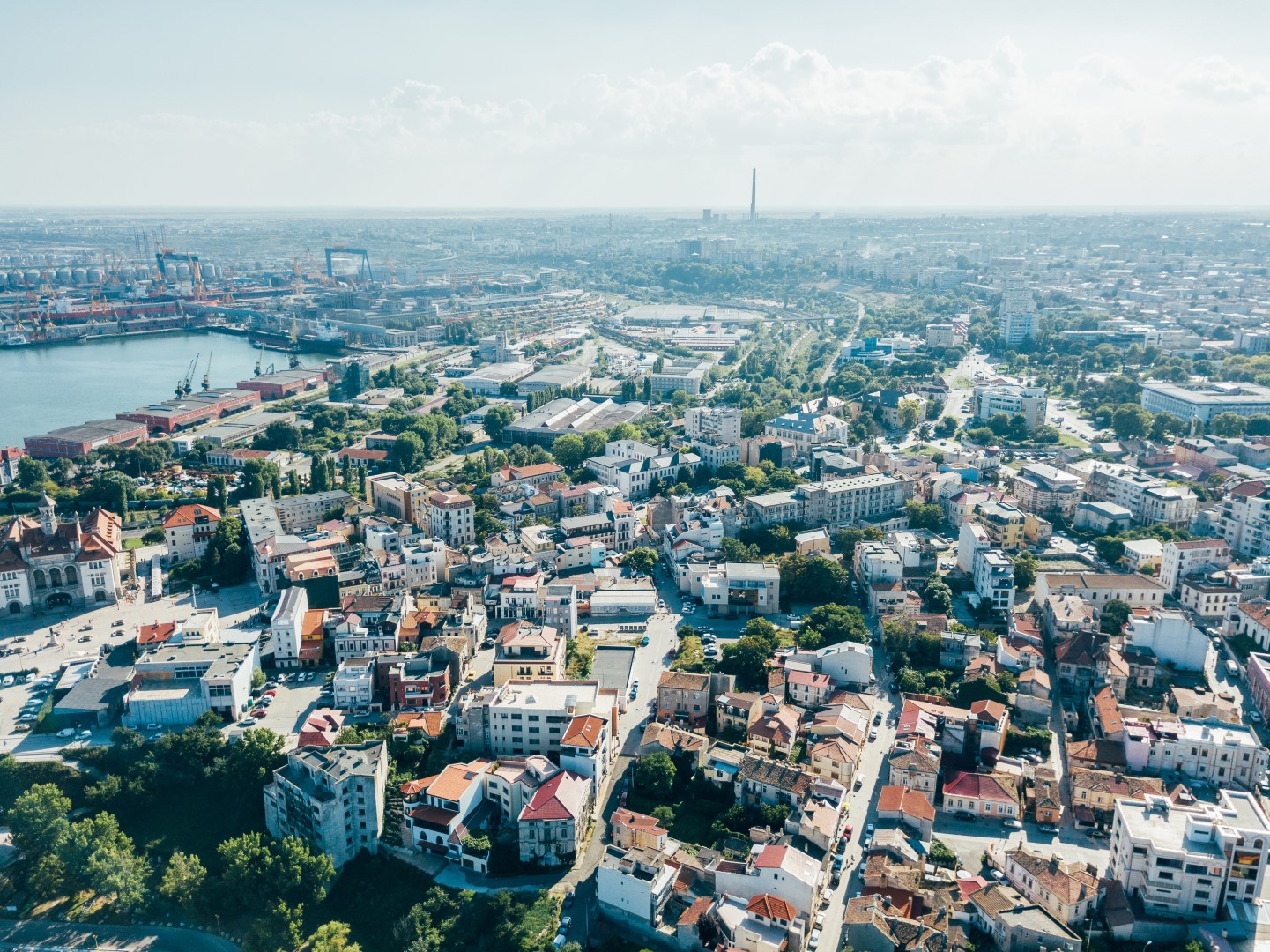
Constanța is steadily continuing on its path of being one of Romania’s regional powerhouses. The touristic destination is also an unshakeable pillar of the country’s defence, energy, and food security. Constanta is looking ahead to turbo-boosting its superpowers and a slow transition towards building a corporate culture.
One of the country’s most powerful developers & investors, IULIUS, moves forward with its master planning for the urban regeneration project on 38 hectares, which previously housed the operations of the country’s largest oil products storage and import/export. To draw its vision, the company has retained one of the most prestigious UK-based architectural companies, launched public debates over future functions, and is progressing with the soil decontamination and regeneration phases.
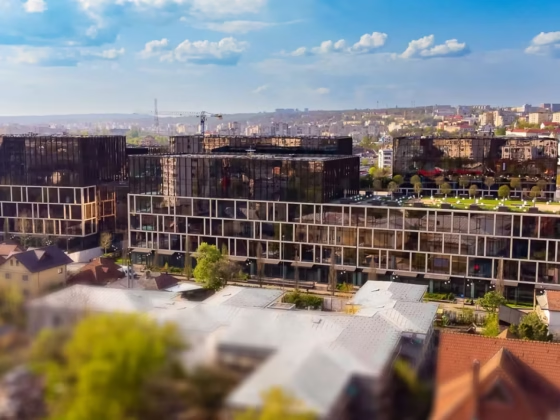
Meanwhile, a smaller, yet more agile entrepreneurial developer is analysing the opportunity of promptly answering the city’s needs for modern office and retail space, potentially serving as an incubator for companies looking to tap into one of Romania’s largest pools of graduates. These initiatives are crucial for Constanta. While the county is uniquely strong in terms of military, energy, shipping & logistics, and agricultural capabilities, these sectors tend to be moderately employment-intensive; thus, a significant part of the locals rely on seasonal tourism jobs for their livelihood. Should the county be able to retain its generous student pool and enjoy year-round employment, the overall prosperity of the region will significantly increase.
Until construction takes shape, the county needs to focus on developing its current strengths. Constanta experiences one of the highest increases in incoming tourists, 11.47% y-o-y growth, above the capital city’s expansion (9.35%) and more than double the national average (4.75%). The city’s grand reopening of the Casino, an art nouveau historical landmark, after years of restoration efforts, should attract new interest. It is to be determined whether it can fully balance out the adverse effects of cancelling the Neversea festival and the restrictions on vacation vouchers during a more cautious consumer behaviour season. New emerging festivals such as “Beach!Please” could help maintain numbers.
New investments in energy infrastructure are steadily moving forward. This year, the authorities began drilling for the first well of Neptun Deep and overcame multiple attempts to stall or block construction initiated by international NGOs. Neptun Deep is of utmost importance not only for Romania, but for Europe as well. In addition to Germany, Hungary is now negotiating to purchase future production. The project can redraw the map of political and economic influence on the continent. Another key event during the past 6 months has been the signing for building the 3rd and 4th nuclear reactors of Cernavoda Power Plant. An international consortium formed by Flour, Sargent & Lundy, Atkins Realis, and Ansaldo will deliver 1,400 MWh of new energy production in seven years. Meanwhile, a 2 billion EUR retrofit contract for Unit 1 was signed. Thanks to its strategic positioning along the Black Sea coast, Constanta plays an essential role in renewable energy, as well. GWhs are built or under development by powerful international investors such as INGKA, Monsson, Rezolv Energy, Copenhagen Infrastructure Partners, Electrica, Eurowind, PPC, Ecoenergy, among others. By mixing the local energy expertise and agricultural production strength, BSOG Energy, backed by Carlyle, launched a new 65 million EUR biomethane and organic fertilized plant in Constanta.
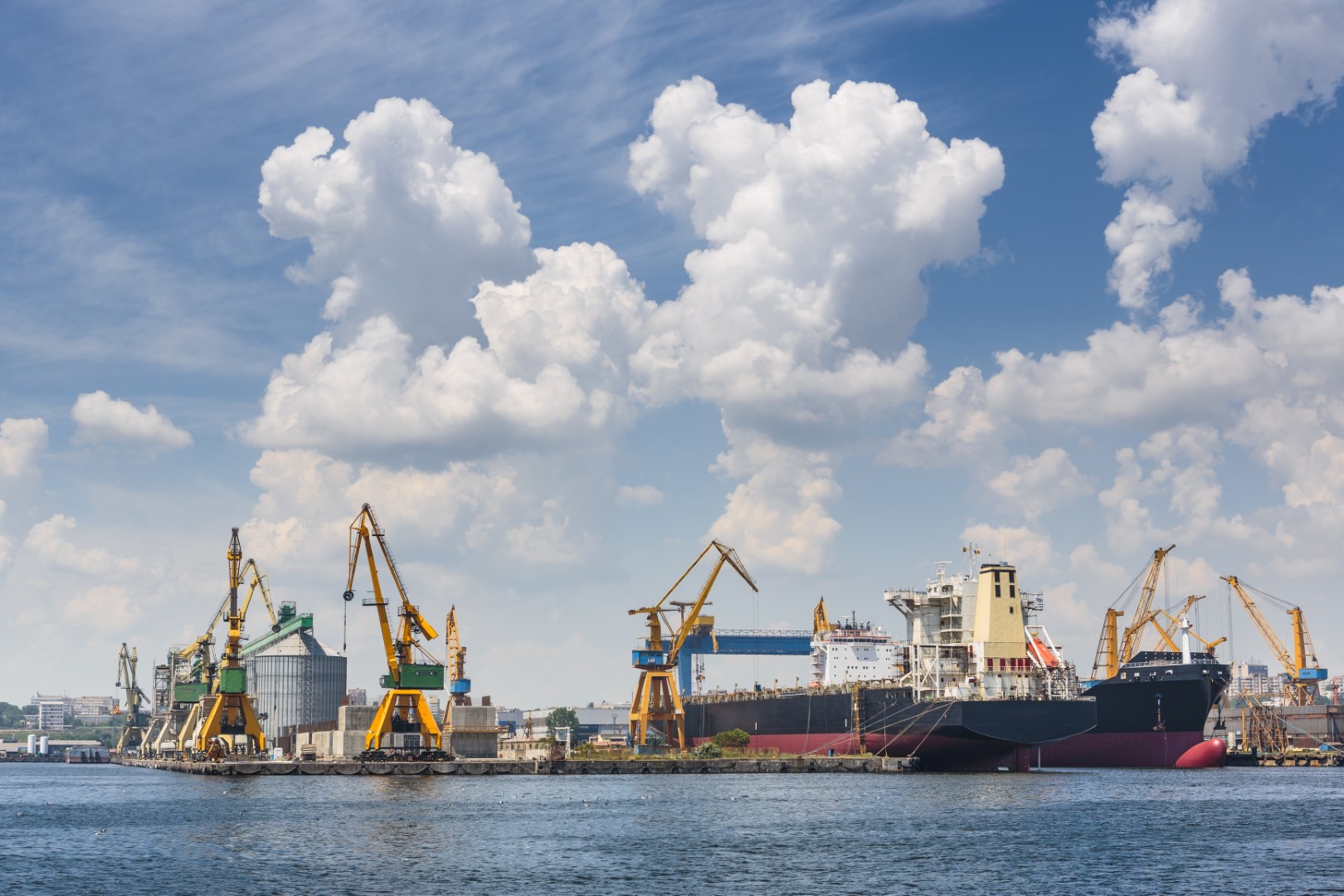
In addition to the expansion of the Mihail Kogalniceanu military base, the strategic defence role of Constanta shall be enhanced by further investments in the Military Port. The Romanian Naval Forces began work on a new wharf and advanced military logistic capabilities. Most recently, the EU unveiled its defence strategy for the Black Sea. In addition to the NATO military base, Kaja Kallas, the EU Diplomacy-Chief, announced major investments in road, air, sea, and rail logistics for heavy equipment transportation. The EU shall establish a Sea Security Hub in the Black Sea, which will serve as an early warning system for potential threats. At the 3Seas Initiative security forum in Warsaw this year, the importance of building the northern corridor of Via Carpathia was yet again underlined by the President.
Meanwhile, at the local level, the city council made small steps towards improving the living infrastructure, mostly relying on EU funds: the student housing was refurbished, the central heating system underwent upgrades, and the flagship Gheorghe Hagi stadium finally signed the financing contract. At the county level, one of the most significant developments is the “Techirgiol Alternative Highway”, which enables much faster traffic distribution to the beach villages along the coast. The government approved the feasibility numbers, and the bid for works is pending. Meanwhile, the Eforie public authorities are attempting to streamline traffic by constructing a couple of flyovers; the bid was recently caught in red tape, and we’re waiting for new developments.